
Can Martial Arts Help Children Improve Focus and Concentration?
By AG Martial Arts · · Updated
A practical guide for parents whose child struggles to listen, stay focused or concentrate at school and at home.
In this guide
Martial arts gives children repeated opportunities to listen, move, stop and try again. That can make it a useful activity to explore when your child finds group instructions difficult. It is not a promise of better school results or a treatment for attention difficulties. The practical question is whether a particular class helps your child participate comfortably and practise skills at an appropriate pace.
What Does Focus Look Like In A Beginner Class?
Focus does not mean standing perfectly still throughout the lesson. A young beginner may show useful progress by watching one demonstration, waiting briefly for a turn or returning to an activity after a reminder. An older child may be ready to remember a short sequence or explain a safety instruction back to the coach.
Look for a class with enough movement to keep students involved, alongside clear moments for listening. Long explanations, noise and complicated instructions can make a session harder to follow. The right balance depends on the child and the programme, not just the club's name.
A Practical Example To Look For
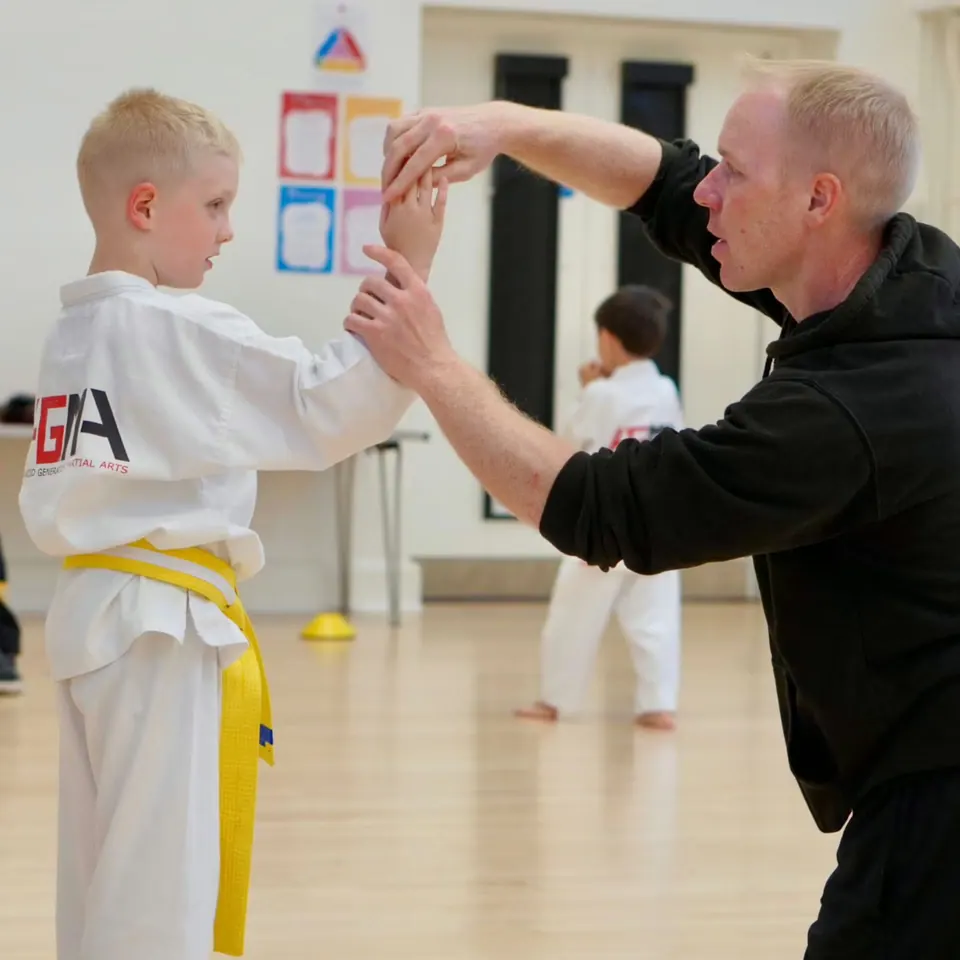
During a trial, notice what happens when the instructor demonstrates a simple movement. Do they explain one step, demonstrate it clearly and give children a chance to practise? If someone misses the instruction, can they see it again without being embarrassed?
Another useful moment is the transition between activities. Watch whether children receive a clear signal to stop, put equipment down and listen. These are examples of teaching approaches to assess at your trial, not a claim that every child will respond in the same way or that every lesson uses identical exercises.
Choose The Age Group Before The Convenient Time
A younger child and a teenager need different levels of explanation and challenge. Start with children's martial arts classes and the programme listed for your chosen venue. Do not book an older session simply because its start time fits the school run. If your child is close to an age boundary, ask the team which group is appropriate before requesting a trial.
Tell The Instructor What Helps Your Child
Before the session, share practical information privately: whether short instructions help, whether your child likes to watch before joining, or whether a busy room can feel overwhelming. You do not need to post personal information in a public review or explain it in front of the group.
Ask how the coach handles a child who needs an instruction repeated or a short pause. A reassuring answer should describe what can realistically be offered in that class. It should not promise support that has not been discussed or imply that one activity can resolve every difficulty.
How To Judge The First Few Visits
Use small observations rather than expecting an immediate change at home or school. Was your child able to join an activity? Did they understand a little more of the routine? Were corrections calm and clear? Did they want to try again? A child can enjoy the class while still needing reminders.
Avoid comparing your child with a more experienced student. Familiarity with the room, instructor and routine takes time. If a session remains distressing or unsuitable, discuss another programme or setting rather than assuming that more pressure is the answer.
Questions To Ask Before Booking
- Which current group is appropriate for my child's age?
- How are demonstrations and instructions explained to beginners?
- What happens if a child needs to watch first or take a brief pause?
- Can we discuss practical support before attending?
- Where should we arrive and who should we speak to?
Find A Practical Weekly Class
Compare the current local timetable through all class locations and open the exact venue page. Check the journey, finish time and programme, especially if siblings need different groups. The venue timetable is the source for changing class details; an older article or social post should not be used as a substitute.
Membership information is on membership prices, and the first trial can be requested through free trial booking without installing the app. Use the trial to assess the coaching and your child's experience before deciding whether regular training is a good fit. Read our safeguarding policy if you want to understand how concerns can be raised.
Related guides
- What Age Can a Child Start Martial Arts?
Some AG Martial Arts infant sessions accept children from age three. Compare ages 3–6, juniors and teens, and check readiness before booking.
- Your First AG Martial Arts Trial: Booking, Kit and Arrival
Know what to bring, how to check your confirmation and what a first AG Martial Arts class looks like. A practical checklist for a free trial.
- Choosing a Safe Kids' Martial Arts Club: Parent Checklist
Ask about safeguarding, supervision, contact, first aid and collection. Use this checklist before booking a children's martial arts trial.