
Five Things to Notice in Your Child's First Month of Martial Arts
By Sensei Andy · · Updated by AG Martial Arts
Look for small changes in class, such as asking for help or trying a movement again. Use these observations instead of expecting instant confidence.
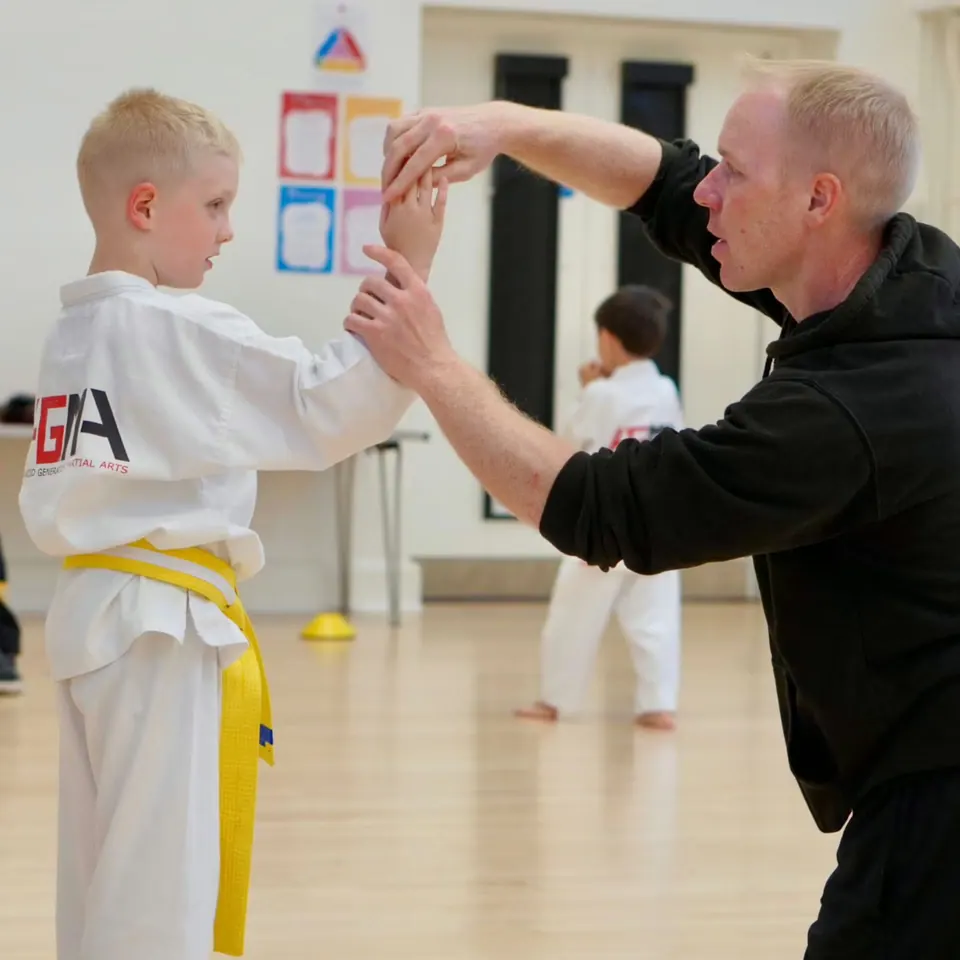
A child does not have to become more outgoing to enjoy martial arts. Over the first few visits, look for small signs that the class is becoming familiar and that they are choosing to take part.
Five observations to discuss with your child
- They can tell you what happens at the beginning of class.
- They ask for help, or accept another demonstration when a movement is unclear.
- They are willing to try one task again after a mistake.
- They can name a skill they want to practise next time.
- They choose to return, even if they still feel a little nervous.
Notice effort without comparing children
Ask what felt easier or more enjoyable this week. If a child says an activity was uncomfortable, listen and ask the coach about the particular exercise. Progress is not a deadline for a belt or a guarantee of changes at school.
For help choosing the group in the first place, use our parent guide to confidence and supportive coaching. If the first visit feels like the hard part, see how to plan a trial for a shy child.
Related guides
- What Age Can a Child Start Martial Arts?
Some AG Martial Arts infant sessions accept children from age three. Compare ages 3–6, juniors and teens, and check readiness before booking.
- Your First AG Martial Arts Trial: Booking, Kit and Arrival
Know what to bring, how to check your confirmation and what a first AG Martial Arts class looks like. A practical checklist for a free trial.
- Choosing a Safe Kids' Martial Arts Club: Parent Checklist
Ask about safeguarding, supervision, contact, first aid and collection. Use this checklist before booking a children's martial arts trial.