
How Martial Arts Teaches Children Discipline and Respect
By AG Martial Arts · · Updated
A clear guide for parents who want an activity that supports listening, behaviour, respect and positive routines.
In this guide
Parents sometimes use the word discipline to mean listening, following a routine or managing frustration. For a children's martial arts class, it should not mean fear, humiliation or unquestioning obedience. A useful class combines clear boundaries with respectful coaching and gives children opportunities to practise responsibility in small, understandable steps.
What Respect Should Look Like In Class
Respect works in both directions. Students can be expected to listen during a demonstration, look after equipment and give other people space. Instructors should explain those expectations clearly, notice beginners and correct mistakes without making a child feel ashamed.
A busy class can still be well managed. Look for clear transitions between activities and a coach who can regain attention calmly. Loudness, impressive techniques or a strict-looking line of students do not on their own establish whether the environment is right for your child.
Boundaries That Children Can Understand
During a trial, listen to how safety instructions are given. A rule such as waiting for the coach before using equipment should be explained in a way the group understands. Younger children may need more reminders and demonstrations than older students.
Watch what happens after someone makes a mistake. A constructive response identifies what to do next and gives the student another opportunity to practise. Public embarrassment or pressure to perform beyond the student's readiness is not a useful measure of high standards.
An Example To Discuss With The Coach
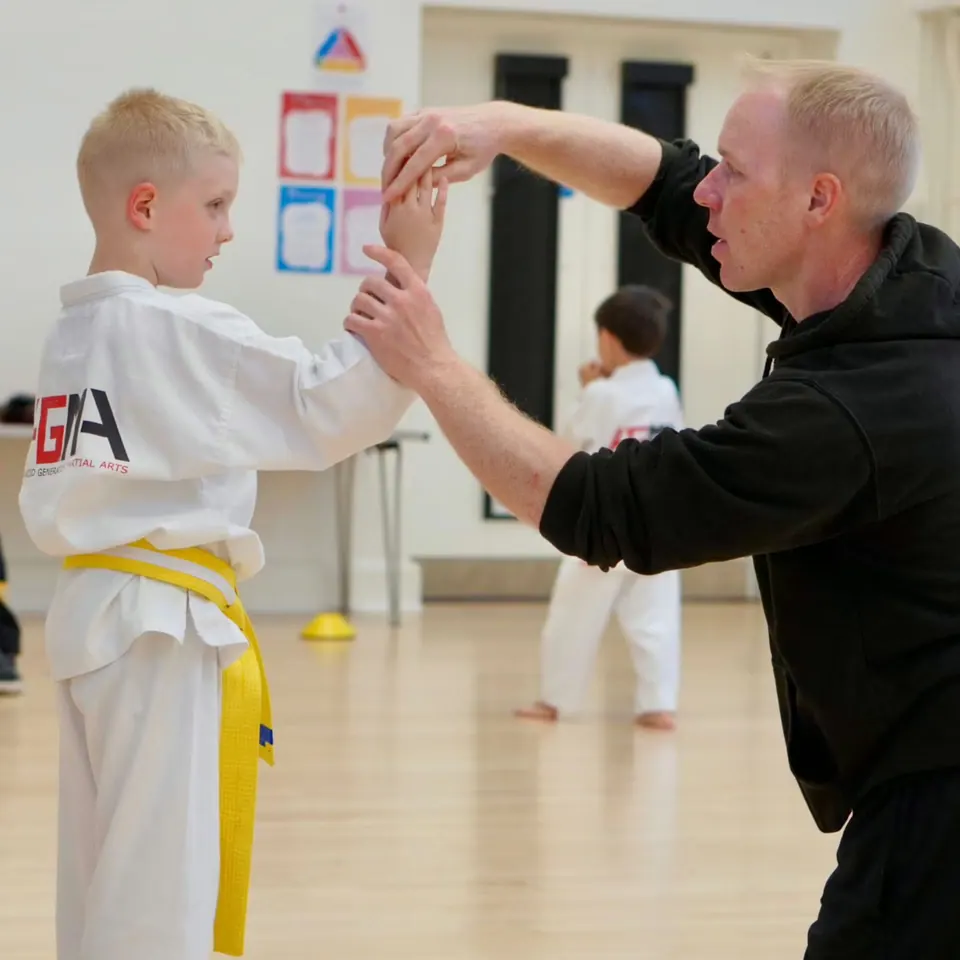
You could ask how a beginner is introduced to taking turns with a partner. A clear explanation might cover where to stand, when to begin and how the coach supervises the activity. The important part is whether the arrangement is appropriate for the student's age and experience.
This is a question to assess the real class, not a promise that every programme includes the same partner work. Check how contact is introduced, whether it is appropriate for beginners and what participation involves before booking a session.
Self-Discipline Is Different From Being Told Off
A student may gradually learn to arrive prepared, remember part of a routine or keep trying after a correction. These are practical habits to encourage. They do not require a child to be naturally confident or to complete every activity perfectly from the first visit.
At home, ask a simple question such as what they enjoyed learning or which instruction was new. Avoid using a martial arts class as a threat or promising that the coach will fix behaviour. Children respond differently, and improvement in one setting does not guarantee an immediate change elsewhere.
Choosing The Right Group
Use children's martial arts classes to compare programmes, then check the current options at the exact venue. The most convenient time is not always the most suitable age group. Ask before booking if your child is near a programme boundary or needs particular practical support.
For siblings, compare both children's sessions separately. They may need different groups even at the same venue. Check the weekly journey and finish time so attending does not become a source of unnecessary stress for the family.
What To Notice During A Trial
- Are the expectations clear for a new student?
- Does the instructor explain what to do instead of only saying what is wrong?
- Are beginners included and given a chance to ask questions?
- Is partner work supervised and appropriate for the group?
- Does your child feel respected and willing to return?
Raise Questions Early
If you are unsure about a teaching approach, discuss it with the instructor or AGMA team. Ask about the specific situation and what support can be offered. Our our safeguarding policy page explains how to raise welfare concerns; a parent should not feel that asking a reasonable question is disrespectful.
One trial is an introduction, not proof of a long-term outcome. Use it to assess the atmosphere, communication and your child's response. If the fit is wrong, compare another programme or venue rather than assuming a child must simply become tougher.
Make The Next Step Practical
Browse all class locations for current class locations and open the venue timetable before choosing a session. Check membership prices for the basic membership range, joining fee and other costs to discuss before joining. You can request the first free trial through free trial booking without installing the app, then decide whether the class is a routine your family would like to continue.
Related guides
- What Age Can a Child Start Martial Arts?
Some AG Martial Arts infant sessions accept children from age three. Compare ages 3–6, juniors and teens, and check readiness before booking.
- Your First AG Martial Arts Trial: Booking, Kit and Arrival
Know what to bring, how to check your confirmation and what a first AG Martial Arts class looks like. A practical checklist for a free trial.
- Choosing a Safe Kids' Martial Arts Club: Parent Checklist
Ask about safeguarding, supervision, contact, first aid and collection. Use this checklist before booking a children's martial arts trial.