
What Children Can Practise in Martial Arts Classes
By AG Martial Arts · · Updated
See what children can practise in a well-run martial arts class: movement, listening, safe partner work and progress at their own pace.
In this guide
Children's martial arts can give students regular opportunities to move, practise a skill and learn alongside others. The benefits depend on the actual class and the child's experience. They are not automatic changes in school performance, behaviour or confidence.
Movement and coordination
An age-appropriate lesson may ask a child to change direction, keep balance or copy a movement with control. Look for a coach who makes a task easier to understand before making it faster or more difficult. Martial arts can be part of a varied week of movement. The NHS physical activity guidance for ages 5–18 explains why different types of activity are useful.
Listening and safe partner work
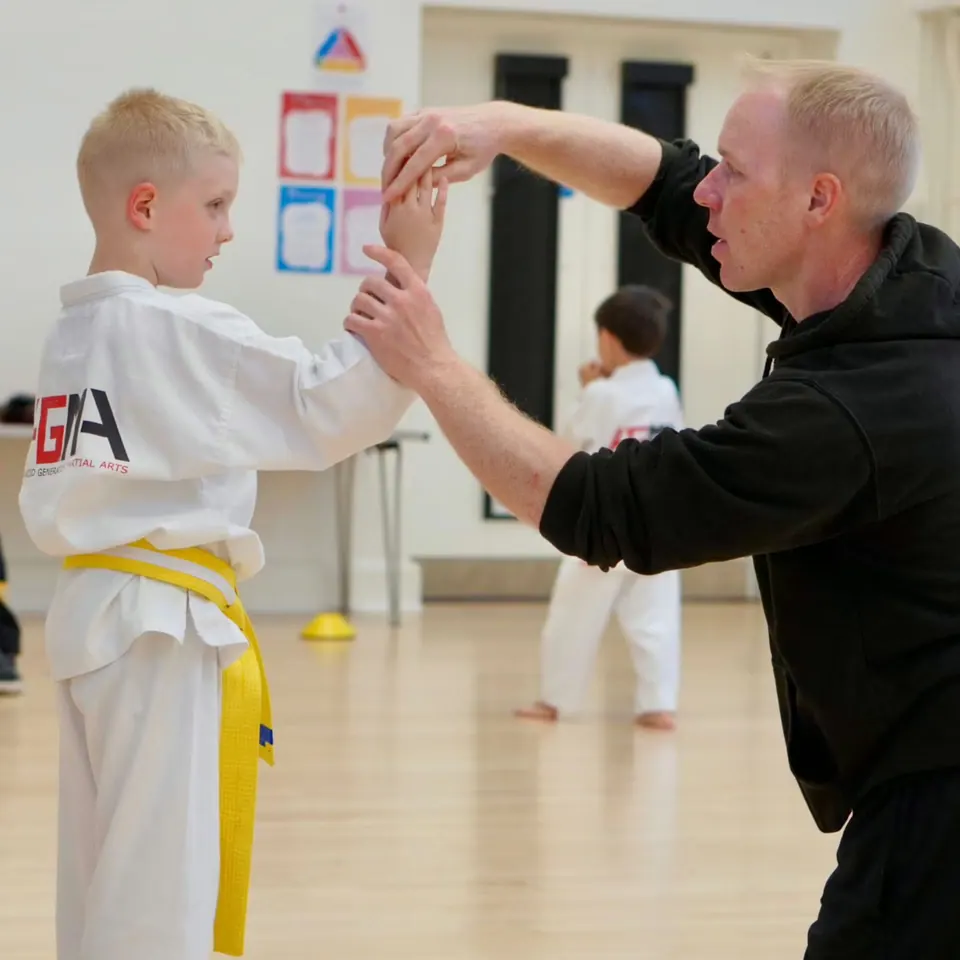
A child might practise stopping on a cue, taking turns or asking for a demonstration. When students work together, check that the instructor explains the limits, matches partners appropriately and supervises what they are doing.
Progress that belongs to the child
Progress can be as simple as remembering a movement or feeling comfortable asking for help. An instructor should be able to explain what the student is working on without promising a belt or a change in confidence by a fixed date.
What to look for at a trial
Choose one thing your child would like to try and one thing you want to check about the class. Afterwards, ask whether they enjoyed it and want to come back. Compare starting ages and programmes, or read how to assess a supportive class for confidence.
Related guides
- Your First AG Martial Arts Trial: Booking, Kit and Arrival
Know what to bring, how to check your confirmation and what a first AG Martial Arts class looks like. A practical checklist for a free trial.
- Choosing a Safe Kids' Martial Arts Club: Parent Checklist
Ask about safeguarding, supervision, contact, first aid and collection. Use this checklist before booking a children's martial arts trial.
- Karate vs Kickboxing for Kids: What Will They Practise?
Compare beginner drills, pads, forms and contact rules before choosing karate or kickboxing. The individual coach and group matter most.